
Choosing blanks
Ring-Spun Cotton vs. Cotton/Spandex Blanks: What to Compare
Understand yarn construction, fiber composition and fit before choosing between an all-cotton tee and a stretch blend.
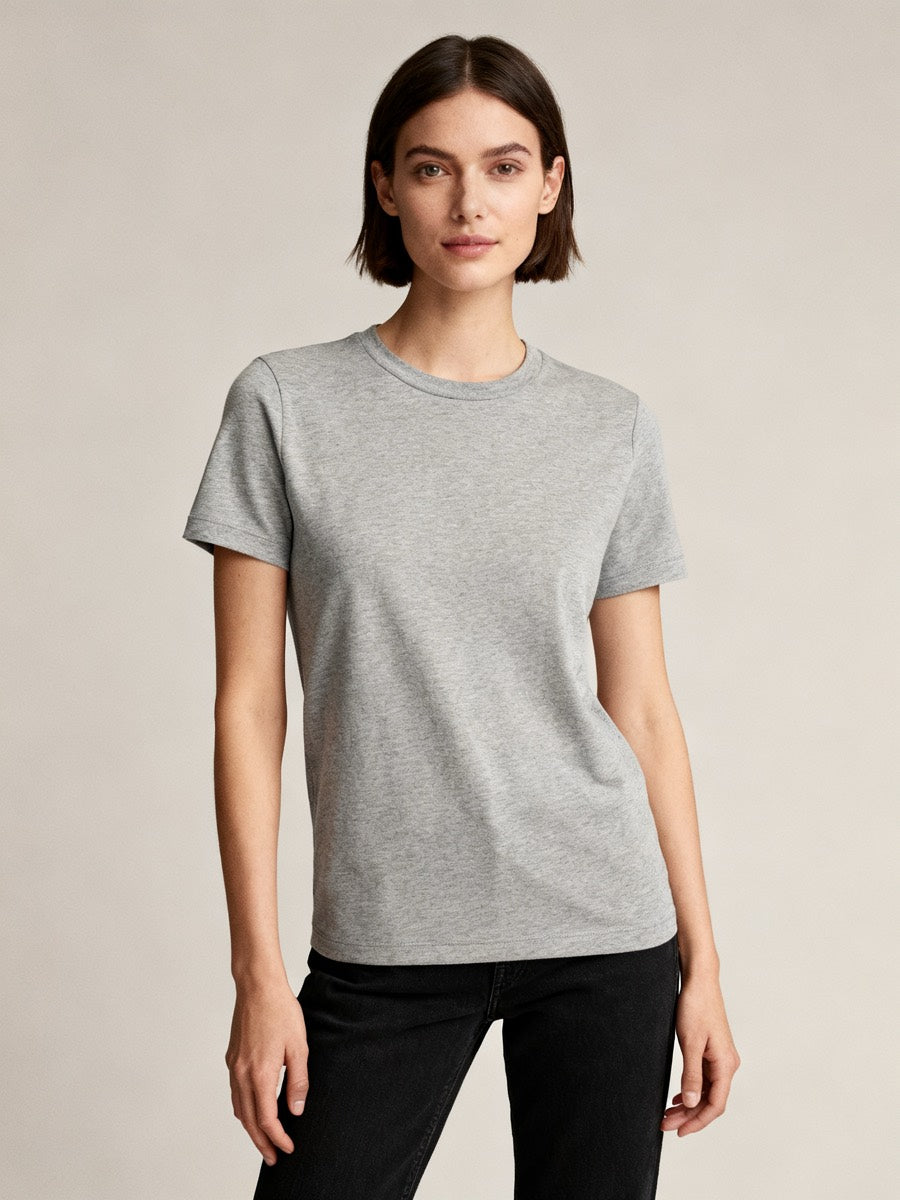
Ring-spun cotton and cotton/spandex are not opposite categories. Ring spinning is a yarn-making method, while cotton/spandex describes a blend of fibers. A shirt can contain ring-spun cotton and spandex at the same time: the B&S Wholesale H1002 is one example.
The useful buying question is whether you want the fit and feel of a particular all-cotton garment or a particular stretch blend. Compare complete garments rather than deciding from one word on the label.
What does ring-spun tell you?
It identifies a yarn construction. Cotton Incorporated’s textile reference discusses ring spinning alongside other spinning methods and explains that softness also depends on twist and fiber characteristics. A ring-spun label is useful information, but it does not specify the shirt’s measurements, fabric weight or fit. See Cotton Incorporated, Textile Yarns.
What does the blend percentage tell you?
It states the listed proportion of fibers. For example, 95% cotton and 5% spandex is different from 100% cotton, even if both garments use ring-spun cotton yarn. Do not assume that two shirts with the same blend percentage have the same cut.
| Style | Listed fibers | What to check on a sample |
|---|---|---|
| H1003 | 100% ring-spun cotton | Body width, drape and the feel of the unprinted fabric. |
| H1002 | 95% ring-spun cotton, 5% spandex | Fit at rest and during movement, plus how the proposed decoration behaves. |
| H3001 | 95% cotton, 5% elastane | The women’s fitted cut, length and intended amount of room. |
Run a side-by-side sample comparison
- Use the intended size and color. A sample in a different cut or shade leaves part of the decision unresolved.
- Measure both garments the same way. Lay them flat without stretching and record the chart measurements relevant to your wearer.
- Try normal movements. Check reaching, sitting and layering where those actions matter to the job.
- Add the real decoration. Evaluate the garment and artwork together, including a comfortable placement and how the design looks when worn.
- Follow the supplied care instructions. Review the sample after care, using the same checks, before approving a larger run.
Keep your notes specific: “needs more body length” is more useful than “the fit is wrong.” If a different size solves the length but creates too much width, compare another cut instead of forcing the size choice.
Is one blend always better for printing?
No label alone approves a garment for every print system. Give the decorator the exact fiber content, garment color and style link. Ask for a sample using the intended ink or transfer and the final artwork size. Equipment and consumable requirements belong to the chosen production process; see our decoration guide for a practical handoff checklist.
Return to the blank apparel buying guide for the complete shortlist process. Compare T-shirts and the women’s range, then use the size-run guide to collect sizes for the style you select.